
Best Age for Newborn Portraits: A 2026 Parent Guide

Table of Contents
Last Updated: September 13, 2026
Why the First Two Weeks Are the Classic Window for Newborn Portraits
If you ask most photographers when to schedule newborn portraits, you'll hear the same answer: within the first 14 days. That window exists for practical reasons, not tradition. During those early days, babies sleep deeply, curl naturally into womb-like positions, and tolerate being moved and swaddled without much protest (nichd.nih.gov). They also tend to have clearer skin before baby acne and newborn rashes appear, and they stay sleepy long enough to move through several poses in one session.
There's a logistical catch, though. At Blessed Moments Photography, the biggest obstacle is rarely the baby. It's the calendar. Between postpartum recovery, pediatrician visits, and sheer exhaustion, two weeks disappears faster than most parents expect. That's why we recommend booking your newborn portraits during pregnancy, ideally in the second trimester, so a slot is held for you before your due date arrives.
Pro Tip Book your session before 30 weeks of pregnancy. Newborn slots fill quickly, and having a reserved date means you're not scrambling to find availability in the days after delivery.
What Changes After Two Weeks: Older Newborn Sessions Explained
Older newborn sessions are portraits taken between roughly three and eight weeks of age, and they are absolutely worth doing. The poses change, but the images don't lose their value. By this stage, babies are more alert and cognitively aware of their surroundings, which means you get open eyes, eye contact, and early expressions instead of only curled sleeping shots.
What you give up is flexibility. A three-week-old is harder to settle into the classic froggy pose, and they may startle more easily during transitions. What you gain is personality. Many parents actually prefer these images because they capture a baby who is beginning to look around and engage.
The real difference between a two-week session and a six-week session comes down to temperament, not quality. Some babies are simply more settled at four weeks than they were at ten days. If your baby spent time in the NICU or you needed extra recovery time, an older newborn session is often the better choice, full stop.
Baby Milestones Beyond Newborn: 3-4 Months, 6-9 Months, and Sitting Up
Baby milestones give you reasons to return to the studio throughout the first year, and each stage photographs completely differently. A first year package can include sessions timed to your baby's development rather than a fixed calendar.
Here's how the stages break down:
Stage | Typical Age | What You'll Capture |
Newborn | 5-14 days | Curled poses, tiny details, sleepy expressions |
Milestone | 3-4 months | Head control, tummy time, first real smiles |
Milestone | 6-9 months | Sitting up, reaching, interactive play |
Cake Smash | Around 12 months | Crawling or standing, messy celebration |
At three to four months, head control is the headline (the CDC). Babies can lift their heads during tummy time and hold a steady gaze, which opens up poses that were impossible earlier. This is also the stage when social smiling becomes reliable, so you get genuine expressions instead of reflex grins. Sessions at this age run shorter than newborn work because a three-month-old has more stamina and needs less settling time.
By six to nine months, sitting up changes everything (the CDC). A baby who can sit unaided can be photographed in upright poses, reaching for toys, clapping, and laughing on cue. This is often the most expressive window of the entire first year, and it's the stage where a session can finally include a stable sibling shot without a parent holding the baby in place.
Key Takeaway The first two weeks get all the attention, but the 6-9 month sitting milestone often produces the most expressive images of the entire first year.
How to Time a First-Year Package
Most families book a newborn session first and then decide later whether to add milestones. That works, but committing to a package up front can offer benefits. Studios often price multi-session collections to encourage early booking, allowing them to plan their calendar around your baby's due date instead of filling gaps.
A practical schedule looks like this:
Newborn: 5-14 days, booked during your second trimester.
Sitter session: 6-8 months, once your baby can sit unsupported for a few seconds.
Cake smash: 11-12 months, scheduled about six weeks ahead so the setup and any custom order can be prepared.
Optional 3-4 month add-on: best for families who want the early-smile stage documented between newborn and sitting.
If you're budgeting, ask whether a package includes digital files, prints, or both, and whether session fees are bundled or charged separately. These details can help clarify the overall investment.
Why the Gaps Between Sessions Matter
Milestone sessions aren't just about the baby. They're spaced so that each one captures a skill your baby has just mastered, which is why the sitting milestone is worth waiting for rather than rushing. A baby photographed at five months may not yet sit, and one photographed at ten months may already be pulling to stand and refusing to stay in one spot.
If your baby was born early, adjust the timing by their corrected age rather than their birthday. A baby born six weeks early will typically hit head control and sitting later than the calendar suggests, and scheduling by corrected age keeps each session matched to what your baby can actually do.
How to Prepare Baby for Newborn Photoshoot Day
Preparation for a newborn photoshoot comes down to three things: a well-fed baby, a warm room, and a relaxed parent. Babies read tension, so the calmer you are, the easier the session goes.

A few practical steps make a measurable difference:
Feed right before you leave or right before the session starts. A full baby sleeps longer and settles faster. If you're nursing, plan to feed on arrival so we can start with a sleepy subject.
Dress baby in loose, easy-to-remove clothing. Nothing with tight waistbands or complicated snaps. A simple zip sleeper means less disturbance when we undress them for posing.
Bring a pacifier if you use one. Soothing techniques work better with a familiar comfort object on hand.
Pack a spare outfit for yourself. Spit-up happens, and you don't want to spend the session worried about your shirt.
Keep the car warm on the drive over. A cold baby wakes up. A warm one stays drowsy through the transition into the studio.
If you're coming from a home session, the same rules apply, just in your own space. Set the thermostat a few degrees warmer than feels comfortable for you, since a lightly dressed newborn loses heat quickly.
Newborn Photography Session Duration: What to Expect
A typical newborn photography session runs two to three hours, though the posed portion usually takes less than half that time. The rest is feeding, soothing, diaper changes, and waiting for a baby to drift back to sleep.
That sounds long, but it's intentional. Rushing a newborn session produces tense babies and stiff images. We build in breaks because a baby who is allowed to eat and settle on their own schedule cooperates far better than one who is pushed through a shot list.
Milestone sessions for older babies are shorter, usually 45 minutes to an hour, because a three-month-old or six-month-old has more stamina and doesn't need the same downtime. Cake smash sessions typically run about an hour, including cleanup.
Watch Out Don't schedule anything immediately after your newborn session. A two-to-three-hour window can stretch longer if your baby needs extra feeding or soothing time, and a rushed ending shows in the final images.
Newborn Photography Safety Tips for Every Age
Safety protocols change with age, and any professional photographer should be able to explain theirs before you book. For newborns, the two non-negotiables are temperature and support. Studios are kept warmer than a typical room because a newborn cannot regulate body heat, and any pose that lifts a baby off a surface requires a parent's hands within inches at all times, even if those hands are edited out later. Beyond these physical safety measures, selecting appropriate outfits for photoshoots ensures that your baby remains comfortable and unencumbered during the session.
For older babies, the risks shift. A six-month-old who can roll or crawl needs a spotter for any elevated pose, and props must be stable and weighted. Outdoor sessions add another layer: sun exposure, insects, and uneven ground. For families considering scenic locations, plan around the season and time of day rather than fighting the weather. Early morning and late afternoon light is gentler, and it keeps a baby from overheating.
Sibling inclusion requires its own plan. Toddlers have short attention spans, so we photograph sibling shots first, while everyone is fresh, then let the older child play while we focus on the baby. Bringing a favorite snack and a quiet activity keeps the mood calm.
Pro Tip Ask any photographer how they handle a baby who won't settle, and listen for a real answer. Experienced newborn photographers have soothing techniques ready and will pause the session rather than force a pose.
Posed vs. Lifestyle Newborn Portraits: Which Style Fits Your Family
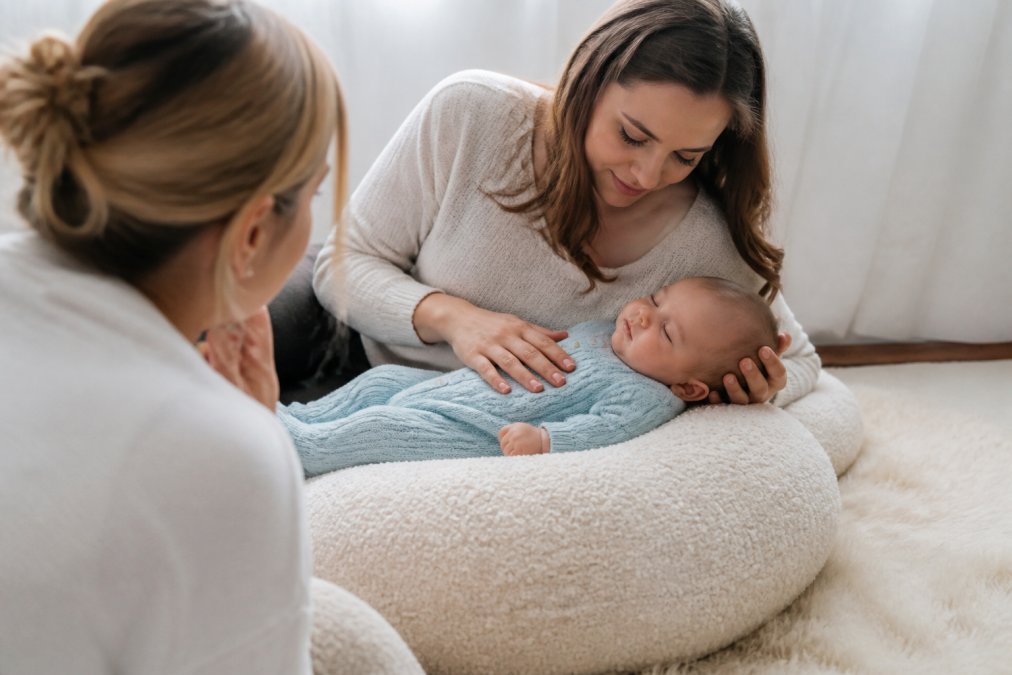
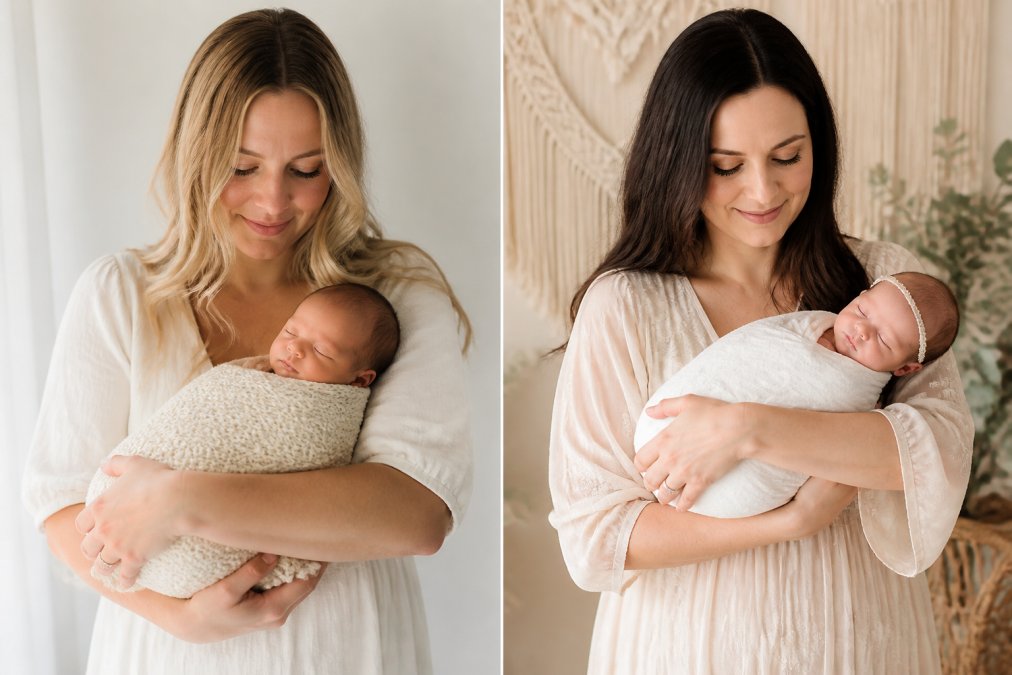
Posed newborn portraits and lifestyle photography are the two main styles, and they produce very different results. Posed sessions use props, wraps, and carefully arranged backdrops to create the classic sleeping-baby images you see in studio portfolios. Lifestyle sessions take place in your home or a meaningful location and document real moments: feeding, cuddling, and the everyday rhythm of your first weeks together.
Neither style is better. Posed work gives you polished, timeless images that hold up as wall art for decades. Lifestyle work gives you candid, emotional frames that feel like a memory rather than a portrait. Many families choose a mix, booking a studio session for posed images and adding a short at-home portion for candid shots.
A Simple Way to Choose
Most parents can decide in about two minutes by answering three questions:
How old will your baby be at the session? Posed work depends on that deep, curly sleep, so it's easiest in the first two weeks. Once a baby is more alert, lifestyle sessions tend to produce better results because they work with wakefulness instead of fighting it.
Do you want wall art or an album? Posed images are usually composed for large prints and framed pieces. Lifestyle images are often stronger as a bound album or a series of smaller frames.
How do you feel about your home? Lifestyle sessions happen in your space, so light matters. A room with a large window and soft, indirect light works well; a dark room can be supplemented with studio lighting, but it changes the feel.
Including Older Siblings
The age of your newborn directly affects how well sibling shots go, and this is one of the most common pain points parents raise. A toddler's patience is short, so the practical approach is to photograph sibling images first, while everyone is fresh, and then let the older child leave the frame. In a posed newborn session, that usually means a parent holds the baby in a sibling shot and is edited out afterward. In a lifestyle session, the sibling can be photographed naturally, reading next to the baby, helping with a blanket, or sitting on the bed nearby.
A few things make sibling shots easier regardless of style: bring a favorite snack, keep a quiet activity on hand, and don't promise the toddler a long session. If the older child is under two, expect the best sibling frame to come in the first ten minutes.
Seasonal and Temperature Considerations
Temperature affects newborns more than most parents expect, and it's the reason studio sessions are kept warmer than a typical room. A lightly dressed newborn loses heat quickly, so a studio that feels warm to you is often the right temperature for the baby.
For outdoor or lifestyle sessions, the season changes the plan:
Summer: early morning or late afternoon light is gentler and keeps a baby from overheating. Midday sun is harsh and hot, and it's the worst window for a newborn.
Winter: indoor sessions are usually the better choice, and the drive to and from the session matters, a cold car can wake a drowsy baby before you arrive.
Spring and fall: these are the most forgiving seasons for outdoor work, with softer light and moderate temperatures, but pollen and insects are worth planning around if you're shooting in a park or garden.
If you're set on an outdoor location, ask your photographer what their backup plan is for rain, wind, or a sudden temperature drop. A studio session can be rescheduled more easily than an outdoor one, and a newborn's comfort should decide the call.
At Blessed Moments Photography, we offer both approaches from our downtown studio, along with outdoor options for families who want a scenic backdrop. Our sessions are built around your baby's temperament, not a rigid template, and we walk you through style choices before your session so there are no surprises.
Frequently Asked Questions
Is 3 weeks too old for newborn photos?
Three weeks is not too old, but your baby will likely be more alert and less sleepy than in the first two weeks. Posed, curled-up newborn portraits become harder because babies start to stretch out and resist being positioned. Many photographers still capture beautiful wrapped and lifestyle-style newborn portraits at three weeks. If you want those classic sleepy newborn poses, book earlier, but an older session can still deliver meaningful images.
What is the 40 day rule for newborns?
The 40 day rule comes from some cultural traditions where mothers and babies stay home for 40 days after birth to rest and recover. It is not a medical guideline in the United States. From a photography standpoint, waiting 40 days means your session will look more like a baby portrait than a newborn portrait, since babies are more awake and have more head control by then. If you want sleepy, curled newborn portraits, aim for the first two weeks.
How long does a newborn photography session usually take?
A typical newborn photography session duration runs two to four hours. The time covers feeding breaks, diaper changes, soothing, and posing. Babies set the pace, so photographers build in plenty of buffer. Ask your photographer about their typical timing when you book so you can plan feeding and nap schedules around the session.
What are the most important newborn photography safety tips?
Babies should never be left unsupported in prop poses, and any pose that requires balancing should be done as a composite image with a parent's hands nearby. Keep the studio warm, since newborns cannot regulate body temperature well. Wash hands before handling, keep the area sanitized, and never place a baby in a container or prop that is not designed for infant use.

Comments